
CHROME HEARTS

THE CULT OF CHROME HEARTS &
the Art of Luxury Rebellion
By Sharon Jane | @itssharonjane
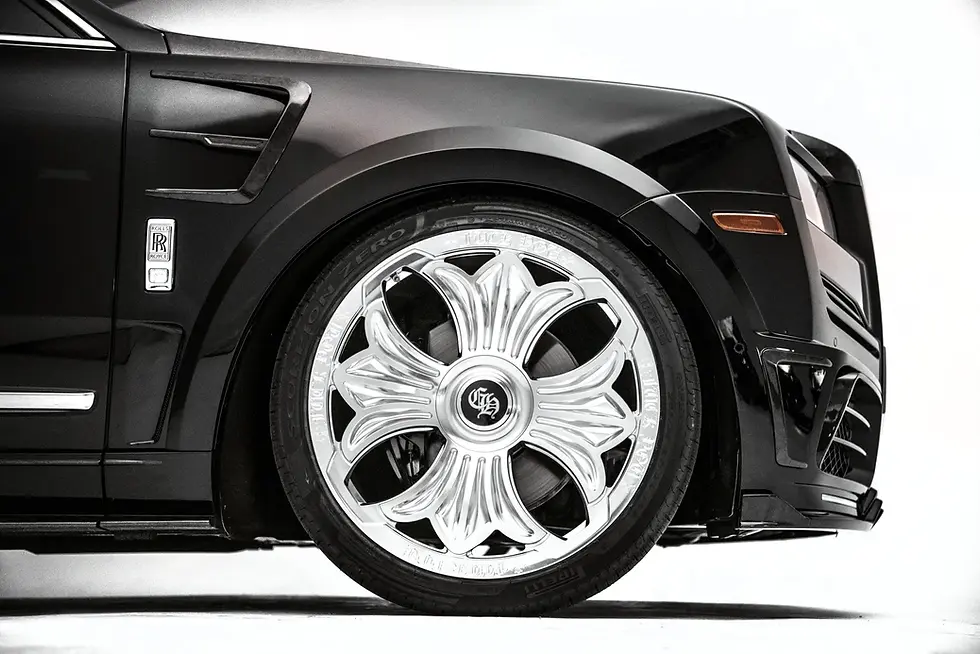
When you think of the great fashion houses, the ones that have shaped history and continue to pioneer in the present, the names that rise above the rest share the same creative spirit: fearless in their rebellion, unwavering in their ingenuity, and steadfast in their identity.
And Chrome Hearts has certainly perfected this, becoming a name spoken with reverence in luxury fashion and one that has never diluted its core identity. Through true artisanship, mastery of customization, and a deeply rooted branding heritage, with its leather and silverwork never outsourced, this motorcycle-born house became the blacksmiths of cool, creating the very tension the once-dormant luxury fashion and accessories industry had been quietly starving for.
Like many of the artists who have rewritten the crafts they mastered, Chrome Hearts was forged in a garage. It began with Richard Stark and John Bowman, driven by a shared purpose: to design and manufacture the motorcycle leather jackets that didn't yet exist on the market. Stark brought access to premium raw leather, sourced through his years as a dealer; Bowman brought the manufacturing skill to turn that quality material into something real, from beginning to end. Together, in a Los Angeles garage in 1988, they built the jackets they'd been searching for. Shortly after, master jeweler and sterling silversmith Leonard Kamhout joined as the third and final co-founder, lending the silver detailing that Chrome Hearts is still defined by today. Premium leather, honest design, and unmistakable silverwork became Chrome Hearts' identity from the very birth of the brand.

The label's rise from garage to cult status began almost by accident, when a low-budget horror film called Chopper Chicks in Zombietown came calling for motorcycle leather gear. One of the film's actresses happened to be dating Sex Pistols guitarist Steve Jones at the time, and through her, the designs caught his eye. Jones began wearing Chrome Hearts on stage, and that was the spark that ignited the brand's presence in the rock scene. Musicians like Lenny Kravitz, Mötley Crüe, and Guns N' Roses soon followed.
The cult fashion label's reputation was especially sealed once Cher, a longtime admirer of the label, presented Stark with the 1992 CFDA Accessory Designer of the Year Award while wearing Chrome Hearts herself, cementing the brand's recognition far beyond its underground roots. With CFDA recognition, Chrome Hearts began its climb to becoming an insider luxury brand.
The raw admiration and pure connection artists feel when embracing Chrome Hearts' designs cements the brand's early anti-marketing, trend-resistant ethos, since they wore the designs out of genuine interest, not persuasion.
This natural blossoming romance with major artists cemented the label's nature: that it will forever remain the cult-classic brand it started out as, and still is today, never a bland copy-and-paste factory brand.
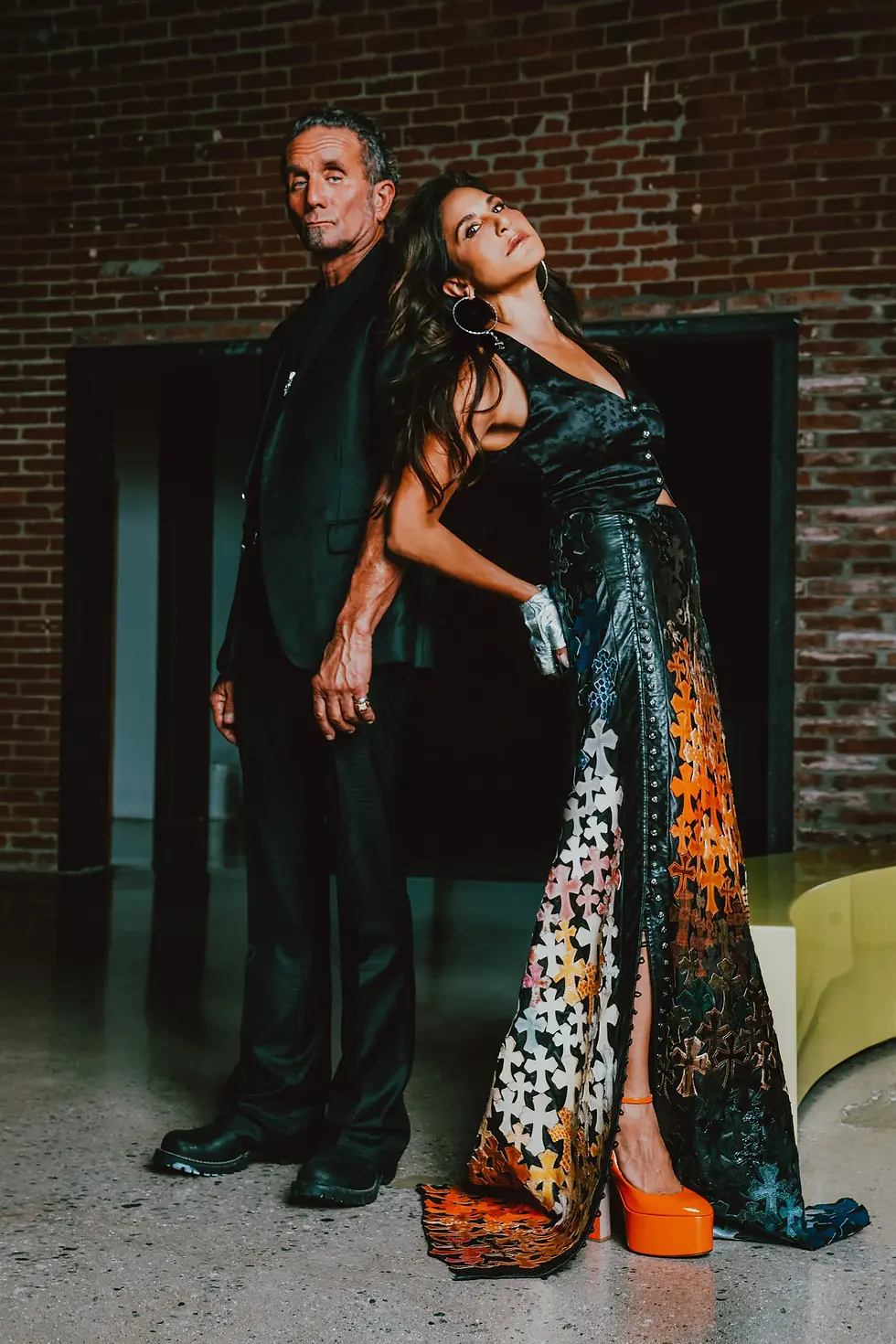
1994 marked a shift within Chrome Hearts, when Bowman and Kamhout withdrew from the brand and Stark bought out their shares, with his wife, Laurie Lynn Stark, becoming co-owner.
With Laurie's background and impressive experience in fashion design and photography, her creative instinct became vital to the brand's global recognition. She photographed the designs and famously initiated the label's magazine in the early 2000s, which featured celebrity editorials and interviews.
In 1991, the label began selling pieces at Tommy Perse's prestigious boutique, Maxfield. This brought exposure and recognition to a wider, wealthier client base. The demand didn't stay contained to Maxfield for long. By 1996, Chrome Hearts had its own flagship in Manhattan, New York. A second boutique followed in Tokyo by 1999, and a third in West Hollywood by 2000.
It's worth noting that years earlier, in 1991, Rei Kawakubo, the visionary behind Comme des Garçons, had invited Richard Stark to showcase Chrome Hearts pieces at her Aoyama flagship. I believe this was the beginning of East Asian fashion's deep affinity for Chrome Hearts and, perhaps, one of the many quiet reasons Minami-Aoyama felt like the destined second home for the label's boutique. Two boundary-pushing creators, bound by a kinship that fashion rarely produces, one later immortalized in a proper collaborative collection.
Expansion, to any real degree, demands tension: "a balance maintained in an artistic work between opposing forces or elements" (Merriam-Webster). This is the very tension that shaped Chrome Hearts' balance of cult and couture. The brand remains a fiercely private, family-run business, producing nearly all its pieces at a single campus in Hollywood, California. Forever an artisan at heart, there is a sacred art to its raw customization and deliberate scarcity, famously refusing to sell its own jewelry online, that lends the label an old-guard luxury appeal, fiercely loyal to its founding alma mater. Isn't that the perfect balance of niche and luxury?
At the core of Chrome Hearts, without forgetting its quintessential craftsmanship, iron-clad heritage, and mastery of customization, lies a symbolism that is embellished, forged, and branded into every garment. Gothic fonts, medieval crosses, horseshoes, piercing daggers, and elaborate fleurs-de-lis: this iconography, unmistakably Chrome Hearts, has become the very language of the label. The hand-drawn Gothic font lends an air of antiquity and remains irreplicable; the crosses speak to devotion, resilience, faith, and profound individuality; the fleur-de-lis celebrates a heritage of craftsmanship and aristocratic elegance; the horseshoe and daggers stand as tokens of righteous defiance and armor-like protection.
With such a defined culture and modus operandi, any brand Chrome Hearts agrees to join forces with is chosen with great care, especially with such elevated symbolism in mind. This is why Chrome Hearts x Mikimoto made perfect sense.
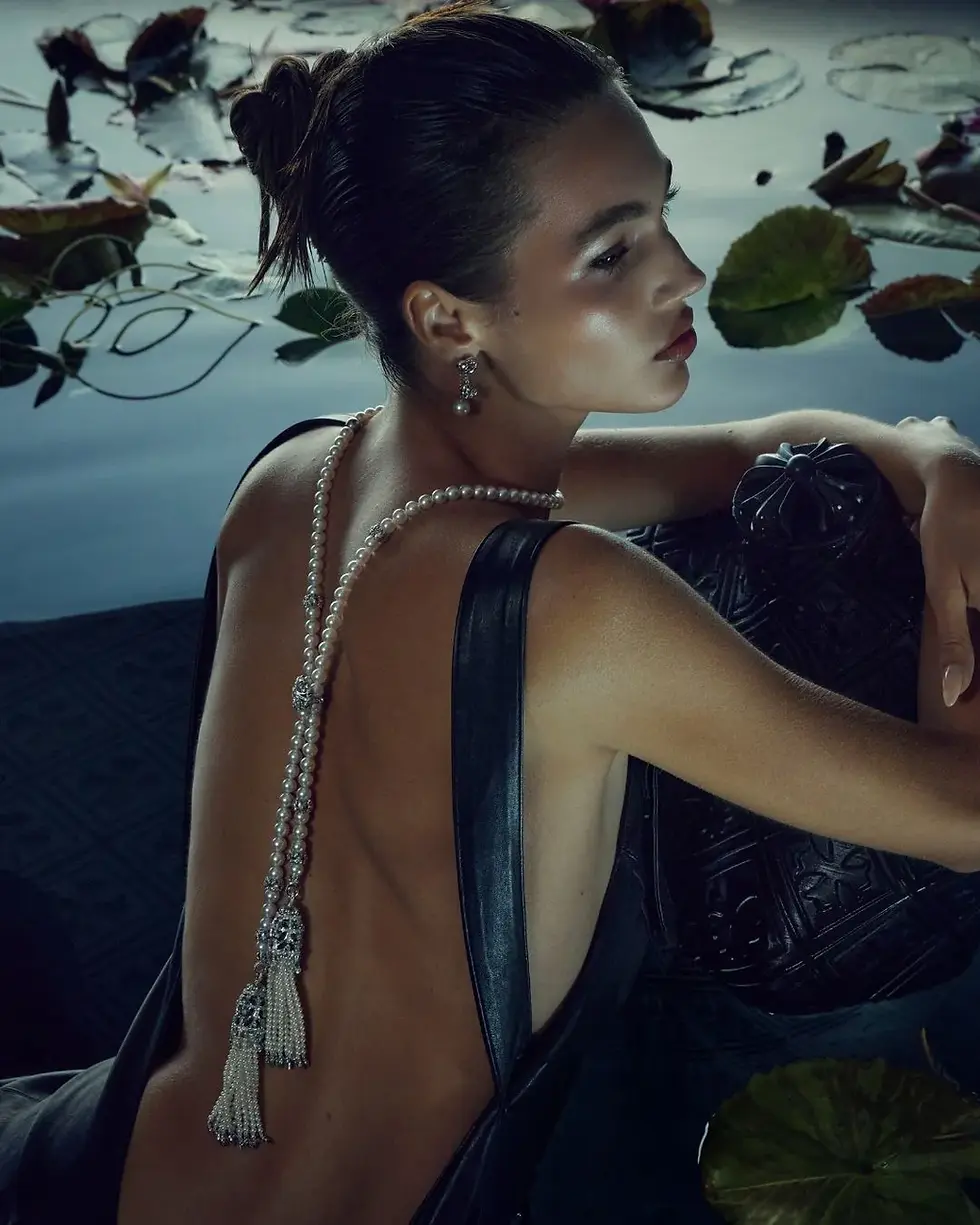
Perhaps, when you think of a luxurious biker-rock-rooted brand, the first thing you likely don't think of is pearls, but this collection is a poetic collaborative juxtaposition. It is heritage and rebellion, loud mystique and quiet refinement, an unexpected love story.
Mikimoto is a renowned jewelry house founded by Kokichi Mikimoto, credited with successfully creating the world's first cultured pearl in 1893. The brand is globally recognized for its incredibly high standards of quality, otherworldly luster, and top-tier harvests.
If Chrome Hearts were ever going to work with pearls, it would undoubtedly have to be Mikimoto.
The collection consists of 11 core pieces, plus four additional exclusive handcrafted necklaces, combining Mikimoto's Akoya and White South Sea pearls with Chrome Hearts' 18-karat gold and diamond accents. Jesse Jo Stark, who had the idea to introduce the timeless elegance of pearls to the brand, was inspired by her parents and wanted the collaboration to represent both the feminine and masculine sides of Chrome Hearts. The collaboration was so successful that it led to a multi-year creative partnership.
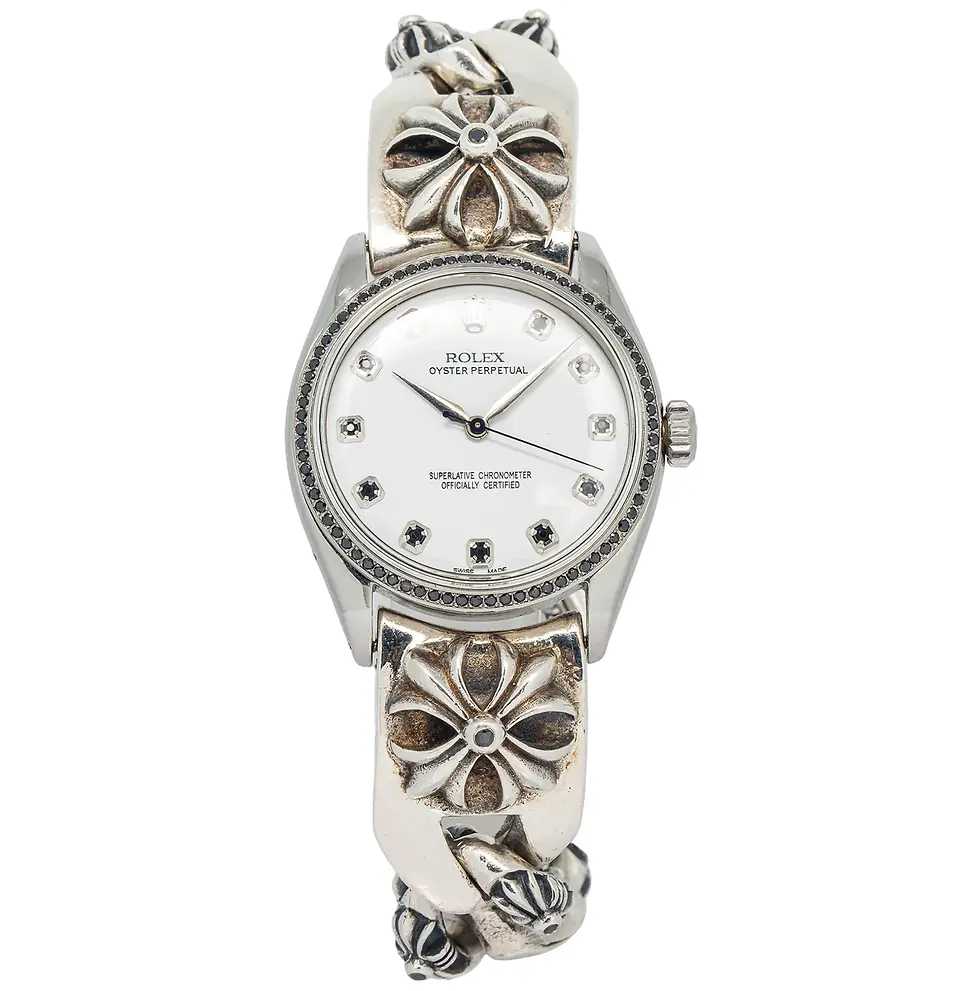
It is quite the investment to own a rare Chrome Hearts garment. It's remarkable how quickly new pieces sell out in stores. The rarity and demand for unique or custom pieces certainly add to the value of ownership. Forever innovative and rooted in its own brand identity and culture, the label's future is certainly in good hands. Jesse Jo, Frankie, and Kristian, the Starks' children and the next generation of Chrome Hearts, are naturally born artists. Kristian, their son, is especially passionate about keeping the label embraced by today's most influential hip-hop artists, the modern-day rock stars.
What started as Richard Stark's dream of a multi-generational empire is now a reality, carried forward with remarkable optimism to keep raising the bar and remain a fashion and design phenomenon. Chrome Hearts endures not despite its contradictions, but because of them, a cultural reset, a constantly moving state of mind.


Comments