
The Business Of BEAUTIFUL THINGS


The most important object at CSI Greenwich may be the sand.
Not the custom-built jumps, the champagne-filled hospitality tents or the contemporary art inside the Brant Foundation. The temporary arena beneath the horses’ feet is what can determine whether the entire weekend succeeds.
In 2023, rain disrupted the Greenwich competition. The following year, organizers built a temporary sand stadium in less than a week, taking over part of a property ordinarily devoted to polo. It was an investment in something many spectators might never think about, yet every rider would notice immediately.
At a five-star show-jumping event, the arena surface is a highly specialized piece of sporting equipment. A horse weighing well over 1,000 pounds must be able to accelerate, turn and land securely after clearing fences as high as 1.60 meters—more than five feet. The footing must remain consistent through changing temperatures, rain and hundreds of rounds.
The Greenwich arena required approximately 60 truckloads of material, enough to cover an entire football field nearly five inches deep. As a nonprofit, CSI Greenwich relies on the generosity of its supporters, including Cara Raether Carey of Trelawny Farm, who donated the arena footing. Even with that contribution, creating the temporary Trelawny Stadium cost well over $1 million.
During competition, Brett Raflowitz of ESI monitors moisture, depth, compaction and other conditions, determining when the arena should be watered, dragged or otherwise adjusted. He also speaks with riders and responds to their feedback. Spectators notice when the ring looks immaculate. Riders notice how it feels beneath the horse.
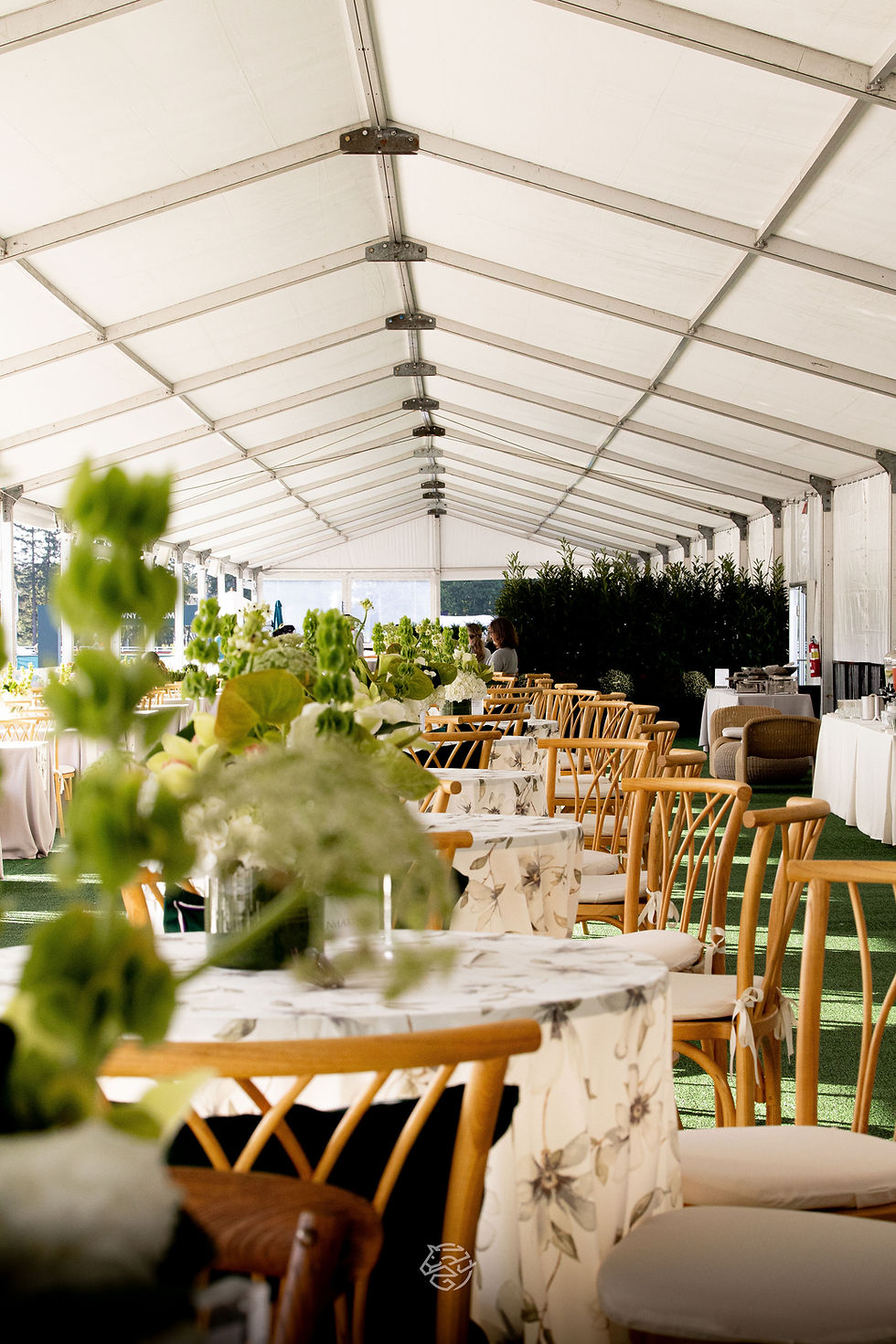
The arena is only one part of a much larger transformation. For four days each September, a Greenwich polo field becomes an international sporting venue. Stabling, warm-up areas, kitchens, bars, hospitality rooms, grandstands and broadcast positions arrive. So do the power, water, communications, security and veterinary systems required to support them.
Then the horses arrive: approximately 150 highly trained equine athletes, potentially valued in the hundreds of millions collectively. Some are purchased at the height of their careers; others are discovered young and developed over many years by a rider with the support of an owner. Partnerships and syndicates allow several people to share in a horse’s journey and experience the sport from the inside. Some travel by highway and others by air, each arriving with its own team, equipment and carefully managed routines.
The field includes Olympic and World Championship medalists competing at CSI5*, the highest level of the sport. At a recent Major League Show Jumping Grand Prix, 13 of the world’s top 20 ranked riders competed in the same arena. At CSI Greenwich 2026, one in three riders is expected to be an Olympian, with 15 countries represented.
By Sunday afternoon, the leading horse-and-rider combinations will be jumping at 1.60 meters before an audience expected to reach 10,000. More than $1.6 million in prize money is offered across the competition program.
The public competition begins on Thursday, September 24, but the real timeline starts nearly a year earlier. CSI Greenwich requires approximately 12 months of planning and two weeks of construction, with more than 100 people from 20 companies working to transform the site. The temporary venue includes 200 stalls and 35,000 square feet of tenting for the horses.
Each figure represents a carefully coordinated chain of decisions. A tent cannot be furnished until it is erected. A temporary kitchen cannot operate without power and water. And the horses cannot arrive until the stabling, veterinary facilities and controlled access routes are ready.
The objective is to complete an enormous logistical exercise without allowing the finished event to feel temporary or improvised. CSI Greenwich may exist for only a few days, but its setting has been evolving for more than a century.

The stone building overlooking the arena was constructed in 1909 as a cold-storage barn on Conyers Farm, the vast working estate created by steel and banking magnate Edmund Cogswell Converse.
Beginning around 1904, Converse assembled approximately 20 farms across northern Greenwich and neighboring North Castle, New York, creating an agricultural operation that employed more than 200 people at its height. “Conyers,” an Old English variation of the Converse name, became the name of the estate and remains attached to this storied corner of Greenwich more than a century later.
Built using stones sourced from local farm fields, the barn belonged to an earlier Greenwich of orchards, livestock and country estates. It later became a polo clubhouse. In 2009, architect Richard Gluckman transformed it again, this time into the Brant Foundation Art Study Center. Outside, Peter Brant had established Greenwich Polo Club in 1981, two years after founding the White Birch Polo Team. The club developed into one of the world’s leading venues for high-goal polo. Now, each September, the property changes disciplines. A polo field becomes an international show-jumping stadium.
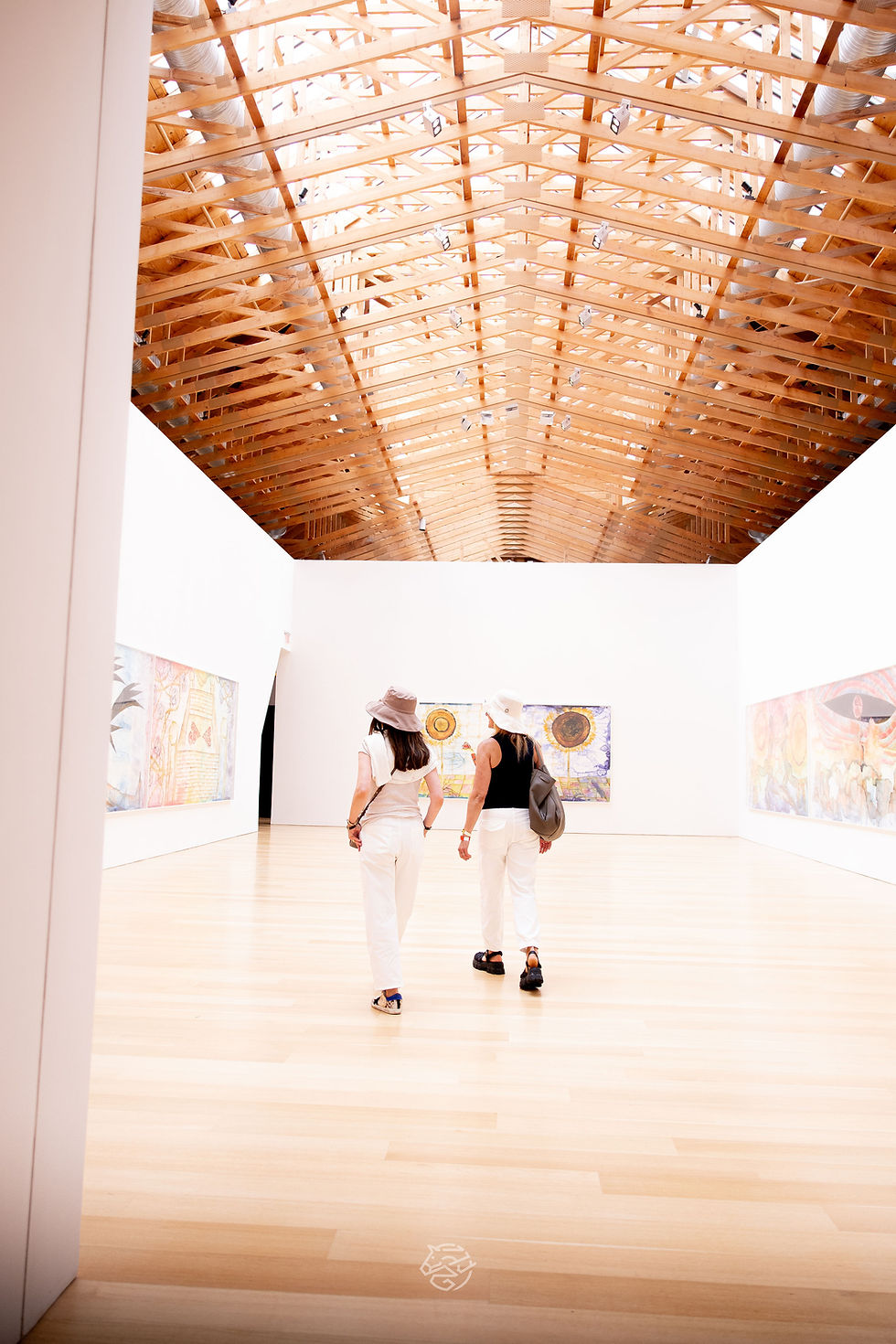
A former agricultural building becomes the architectural centerpiece of a contemporary sporting event. Guests move between five-star competition and modern art without necessarily realizing that the view contains more than 100 years of Greenwich history. The stone barn has lived three distinct lives: farm building, polo clubhouse and art museum. CSI Greenwich adds another chapter to its story.
The event takes place at Greenwich Polo Club, but its economy extends well beyond the property. Riders, owners, grooms, officials, sponsors and production teams require hotel rooms, meals, transportation and supplies. Guests make dinner reservations, shop on Greenwich Avenue and arrange drivers to the backcountry. CSI Greenwich also engages caterers, landscapers, rental companies, security personnel and temporary workers.
The public sees four days of competition. For the businesses supporting it, the event begins earlier and reaches considerably farther. On Sunday afternoon, one horse-and-rider combination wins the Grand Prix. Ribbons are presented, photographs are taken and the guests begin to leave.
Then the production shifts into reverse. The horses depart within approximately three hours, and more than 100 people spend the following week dismantling the temporary venue and restoring the polo grounds. By the seventh day, remarkably little remains.
For one brief period each fall, a Greenwich polo field becomes an international show-jumping venue, a broadcast set, a private club, a public gathering place and a working home for 150 elite horses and the riders who have built their careers around them. The footing makes great sport possible. The production turns it into an occasion. A century-old barn stands watch, while 10,000 spectators carry the energy of the weekend beyond the gates and into Greenwich. Then the trucks return. And the city is gone.


Comments