
The Art of Feeling at Home: Ariel Okin on Interior Design, Memory, and Meaning

Inside The Happy Home by Ariel Okin


There’s a moment that happens in truly great homes — often before you can name why. It’s not about perfection or polish, nor about chasing a trend or a look. It’s the feeling that someone lives here. That stories have unfolded in these rooms. That joy, memory, and meaning are layered quietly into the walls.
That moment is precisely what Ariel Okin has built her design philosophy — and her first book, The Happy Home — around.
In the book, Okin invites readers inside a collection of interiors that feel deeply personal, thoughtfully composed, and unmistakably lived-in. From a relaxed Southampton retreat to a classic New Canaan residence, from Palm Beach elegance to a Park Slope townhouse — and including Okin’s own New York home — the spaces span geography, architecture, and lifestyle. What unites them is not a signature look, but a shared sense of warmth and authenticity.

For Okin, this belief was formed long before her design career began. She traces it back to the house she grew up in — a home shaped not by trends or resale value, but by sentiment. Her parents, both deeply nostalgic, filled their spaces with objects collected over time: artwork, pottery, old family photographs, small trinkets with no monetary value but enormous emotional weight. Each piece served as a reminder of people loved, places visited, and memories made. Watching them preserve these fragments of family history — framing black-and-white photos of great-grandparents, collecting art simply because they loved it — taught her what it truly means to make a house feel like a home.
“They weren’t decorating for effect,” Okin reflects. “They were weaving our family story into the house over time.”
That philosophy carries through every page of The Happy Home. Rather than presenting interiors as finished statements, Okin emphasizes layering — not just of textiles and finishes, but of history, personality, and memory. Rooms feel richer when inherited pieces live alongside new ones. Spaces feel grounded when beauty and function coexist naturally. And homes feel joyful when they reflect how people actually gather, read, rest, and grow.
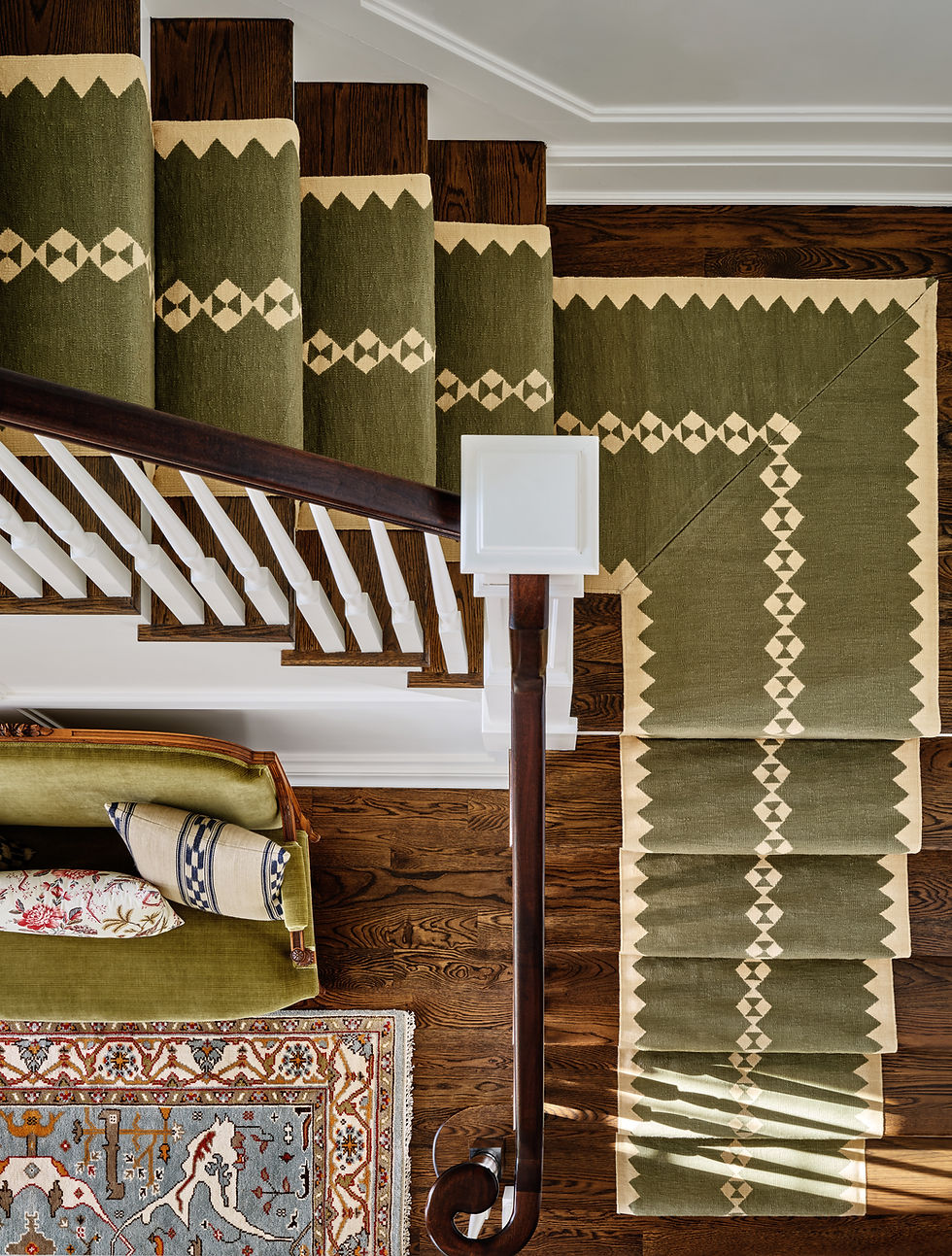
What makes the book especially compelling is that Okin writes it herself. In addition to her interiors practice, she is a seasoned design journalist, and the duality of those roles gives the book its distinctive voice. Designing, she explains, is an intuitive, creative flow. Writing requires stepping back — synthesizing, analyzing, and reverse-engineering the emotional decisions behind each space. The process allowed her to articulate her ethos with clarity, transforming instinct into insight.
That clarity reinforces one of the book’s most refreshing ideas: a home is never truly finished. As people evolve, so do their spaces. Interests shift. Collections grow. Life leaves its mark. To expect a home to remain static is to deny the very thing that makes it meaningful.
“As long as someone is living in a house,” Okin says, “it’s never done.”
Including her own New York home in the book made that truth especially personal. Seeing it through the lens of publication revealed just how deeply sentimental her style truly is — a trait inherited from her parents and grandmother. Many of the objects that take pride of place are family gifts or pieces discovered for their patina and story. What matters most isn’t what the objects are, but how they make her feel and the memories they carry.

That same reassurance extends to her clients and readers alike, particularly those who worry their homes don’t feel “designed enough.” Okin’s advice is simple: let it breathe. Give it time. When you stop chasing how a house should look and start paying attention to what you’re genuinely drawn to, the layers come naturally. The goal isn’t perfection — it’s comfort, ease, and emotional resonance.
If there’s one idea Okin hopes readers take from The Happy Home, it’s this: authenticity is the foundation of good design. Leaning into who you are — not just in your home, but in your life — leads to spaces that feel grounding, joyful, and deeply personal.
In a design world often obsessed with what’s next, Ariel Okin gently brings us back to what lasts: meaning, memory, and the quiet joy of spaces that feel unmistakably our own.


Comments