
Valentino, in Red. An Editor’s Reflection on Style, Power, and Permanence

By Colleen Guilfoile Richmond Founder & Editor-in-Chief, VIVANT
There are designers who define a moment.And then there are designers who define a standard.

Valentino Garavani belonged to the latter—quietly, unapologetically, and always impeccably dressed. His passing marks the end of a chapter in fashion history, but not the end of his influence. Valentino didn’t chase relevance. He built permanence.
Born in Voghera, Italy, and trained in Paris at the École des Beaux-Arts and the Chambre Syndicale, Valentino entered fashion with a classical education and an almost unfashionable belief: that elegance, when done properly, never needs to explain itself. When he founded his couture house in Rome in 1960, he wasn’t offering rebellion or provocation. He was offering assurance.
Early on, that assurance nearly cost him everything. In 1962, with his business on the brink, Valentino presented a collection in Florence dominated almost entirely by red dresses. It was a risk—financial, creative, emotional. It worked. Buyers were transfixed. His house was saved. And Valentino Red was born—not as branding, but as conviction. Red, for Valentino, was not about spectacle. It was about control.
That philosophy defined everything that followed.
Valentino dressed women who did not need transformation. Jackie Kennedy Onassis chose him deliberately after leaving the White House, seeking a designer who would never upstage her. He later designed her wedding dress to Aristotle Onassis—privately, discreetly, flawlessly. Elizabeth Taylor, Princess Diana, Sophia Loren followed. Decades later, Julia Roberts would walk up the Oscar steps in vintage white Valentino, unintentionally creating one of the most iconic red-carpet moments in history. No strategy. Just instinct. Timeless always wins.
What made Valentino quietly radical was his refusal to apologize for beauty. As fashion cycled through irony, deconstruction, and ever-louder statements, he remained steadfastly romantic. He believed in ateliers. In fittings. In hands that understood fabric. In finishing things properly. He was famously exacting—rejecting garments over seams no one else could see, insisting that luxury lived in the details most people never noticed.
Even his personal life carried a softness that surprised people. Valentino adored his pugs—plural—who appeared in photographs and interviews, lounging amid palatial interiors and couture fittings alike. It was a reminder that beneath the formality lived humor, affection, and humanity. Impeccable taste, with a wink.
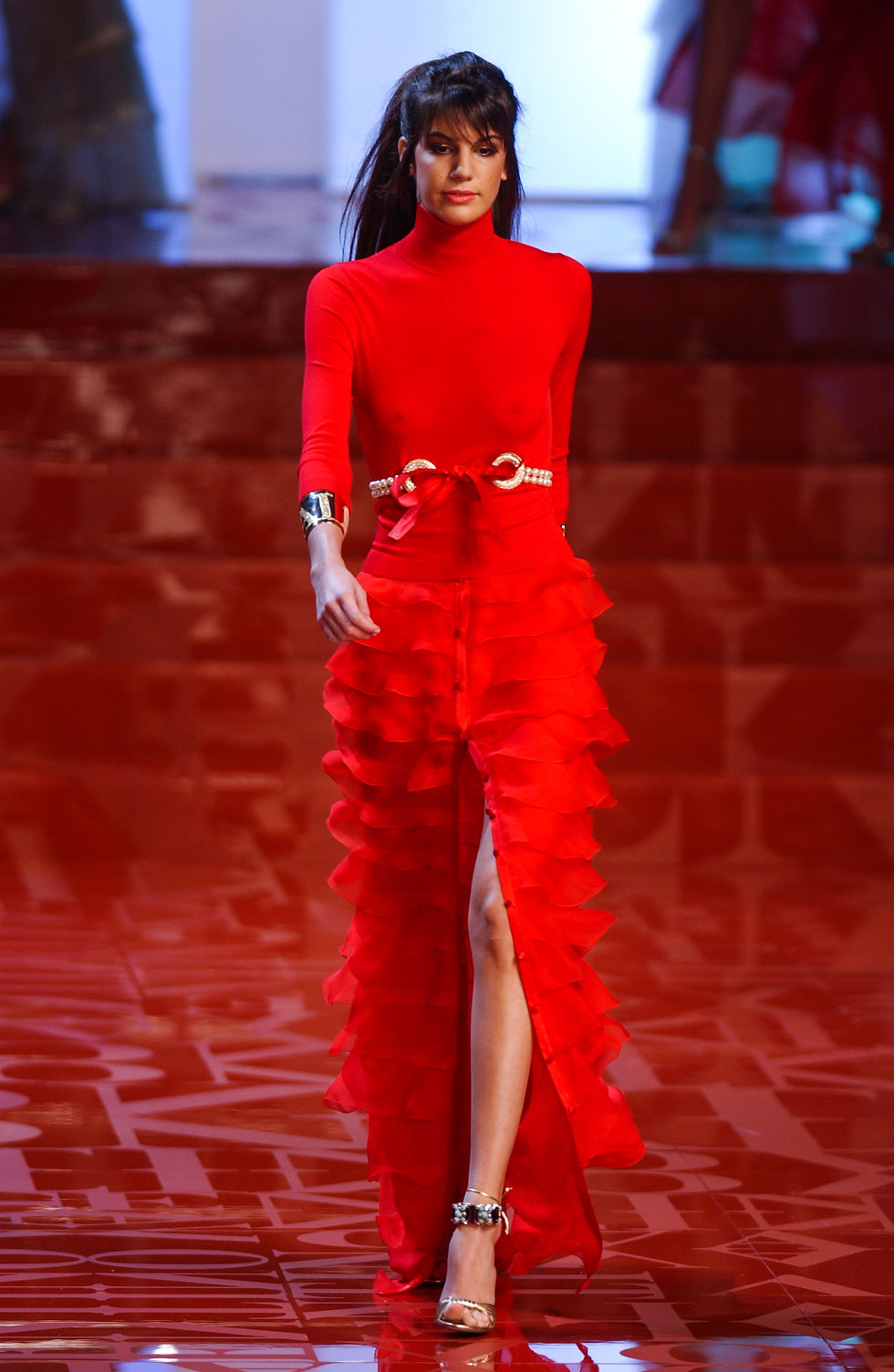
When Valentino retired from the runway in 2008, his final couture show in Paris felt less like a farewell than a benediction. By then, his legacy was already embedded in fashion’s collective memory—not as nostalgia, but as reference. He proved that restraint could be powerful, that femininity could be strong without armor, that elegance was not outdated—it was enduring.
Valentino’s influence now lives far beyond archives and ateliers. It lives in every woman who understands that presence does not require noise. In every designer who still believes craft matters. In every moment when refinement feels more compelling than spectacle.
Red was never just a color.It was a philosophy.
And elegance?Still undefeated.


Comments